Answering: Should I Do My Own Bookkeeping as a Small Business Owner?
Estimated reading time: 9 min read
No. If your billable rate exceeds $50 per hour and you are spending 10 to 20 hours a month on your own books, DIY bookkeeping is costing your business between $6,000 and $24,000 annually in lost revenue, and that does not include the tax penalties, missed deductions, and year-end CPA fees that pile up from unreconciled accounts. Professional bookkeeping from a CPA-supervised firm like AliCat Solutions starts at $400 per month, meaning the math favors outsourcing for the vast majority of service-based businesses in Austin, Cedar Park, and Central Texas.
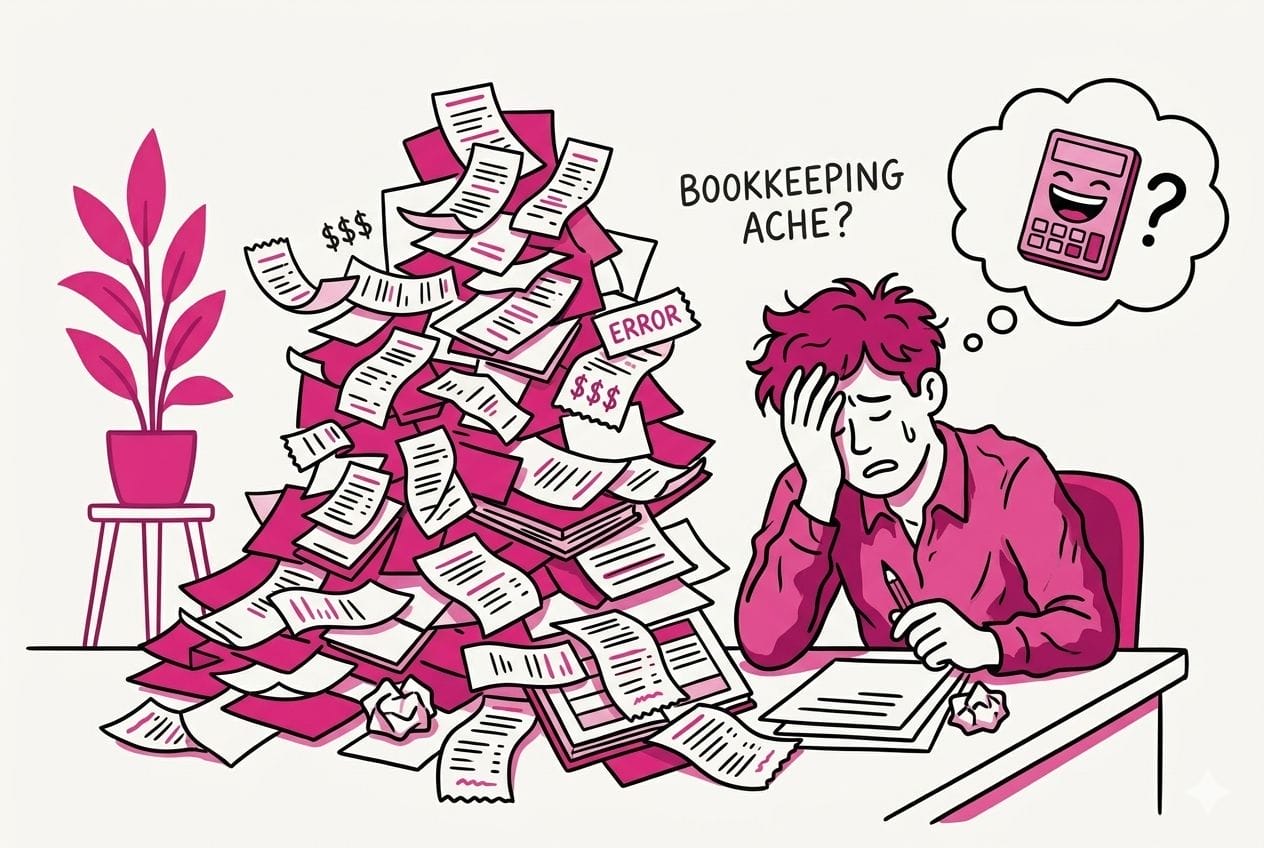
You started your business to do the work you are good at. Maybe that is consulting, contracting, practicing law, or providing healthcare. It was not to spend Sunday nights categorizing transactions in QuickBooks while wondering whether you coded that vendor payment correctly. Yet according to SCORE, the nation's largest small business mentoring organization, business owners spend more than 20 hours per month on financial tasks including accounting and invoicing. That is a quarter of a standard work week dedicated to something that is not your expertise and does not generate revenue.
The real question is not whether you can do your own bookkeeping. You probably can. The question is whether you should, given what it actually costs you in time, accuracy, tax outcomes, and strategic visibility. This guide breaks down those costs so you can make an informed decision.
Key Insights
- DIY bookkeeping costs most service-business owners $6,000 to $24,000 per year in opportunity cost alone, before accounting for errors, penalties, and inflated CPA fees at tax time.
- Professional accountants report spending 20 to 40 percent of their time correcting DIY bookkeeping mistakes during tax preparation, at rates of $150 to $300 per hour.
- Businesses that review financials weekly show significantly stronger financial health. A Federal Reserve study found 92% of companies with excellent financial health regularly build budgets and track their numbers, compared to just 5% of those with poor financial health.
Keep reading for full details below.
Table of Contents
- The Real Time Cost of DIY Bookkeeping
- The Shadow Shift: What You Give Up
- The Archaeology Cost: What Your CPA Charges to Fix It
- The Strategic Blindspot
- DIY vs. Professional Bookkeeping Comparison
- When DIY Bookkeeping Still Makes Sense
- What CPA-Supervised Bookkeeping Actually Looks Like
- Frequently Asked Questions
- Want to Learn More?
- Citations
The Real Time Cost of DIY Bookkeeping
Start with the hours. Industry surveys consistently show that small business owners handling their own bookkeeping spend between 10 and 20 hours per month on financial tasks. That includes categorizing transactions, reconciling bank and credit card statements, managing accounts payable and receivable, running payroll calculations, tracking sales tax obligations, and organizing documents for quarterly and annual tax filings.
Now apply your hourly rate. If you run a consulting practice billing $150 per hour, those 15 hours of monthly bookkeeping represent $2,250 in lost billable time. Over a year, that is $27,000. Even at a more conservative rate of $75 per hour, you are looking at $13,500 annually in opportunity cost. These are hours you could spend on client work, business development, or simply not working on a Sunday night.
The time cost compounds as your business grows. A sole proprietor with 20 transactions a month can probably manage in a few hours. But once you add employees, contractors, multiple revenue streams, and multi-state clients, the monthly bookkeeping workload can easily exceed 25 hours. That is the point where most business owners realize they have accidentally taken on a second job they never wanted.
The Shadow Shift: What You Give Up
There is a name for the bookkeeping that happens after hours. Call it the Shadow Shift. It is the two hours on Tuesday night reconciling your bank feed. It is the Saturday morning spent figuring out why your QuickBooks balance does not match your bank statement. It is the creeping anxiety during a client meeting because you know your books are three weeks behind and tax estimates are due next Friday.
The Shadow Shift does not show up on any financial statement, but it costs you in three measurable ways. First, it consumes your highest-value hours. Business development, client relationships, and strategic planning happen during focused, energized time, not during the leftover hours you squeeze in around bookkeeping. Second, it degrades the quality of both your work and your books. When you are tired, errors creep in. Misclassified expenses, forgotten deductions, and unreconciled transactions accumulate quietly until they become expensive problems. Third, it erodes your capacity for the kind of clear-headed decision making your business needs. You cannot plan confidently when you are not sure whether your numbers are right.
Forty percent of small business owners say bookkeeping is the task they dislike most. That is not a personality flaw. It is a rational response to spending your limited energy on work that does not align with your expertise or your business goals.
The Archaeology Cost: What Your CPA Charges to Fix It
Here is where DIY bookkeeping gets truly expensive. When your CPA receives a year of self-managed books at tax time, they are not doing tax preparation. They are doing archaeology. They are digging through miscategorized transactions, unreconciled accounts, missing documentation, and inconsistent records to reconstruct what actually happened in your business over the past twelve months.
Professional accountants report spending 20 to 40 percent of their time during tax season correcting DIY bookkeeping errors. At CPA billing rates of $150 to $300 per hour, those correction hours add up fast. A tax return that should cost $1,500 to prepare from clean books can easily run $3,000 to $5,000 when the CPA has to fix a year of accumulated mistakes first. You are paying premium rates for work that should have been done correctly throughout the year at a fraction of the cost.
The missed deductions are another hidden tax. Unless you have deep knowledge of the tax code applicable to your industry, you are almost certainly leaving money on the table. Home office deductions, vehicle expenses, professional development, equipment depreciation, and retirement contribution strategies all require accurate, well-categorized records to capture properly. A CPA working from clean, monthly-reconciled books catches these deductions consistently. A CPA doing archaeology in March is focused on getting the return filed, not on optimizing your tax position.
The Strategic Blindspot
Beyond time and tax costs, DIY bookkeeping creates a dangerous strategic gap. When your books are behind or inaccurate, you do not actually know how your business is performing. You cannot answer basic questions: Can I afford to hire? Should I take on that project at a lower margin? Am I making money on this service line or losing it? What will my tax liability look like this quarter?
A Federal Reserve study on small business financial health found a direct correlation between regular financial monitoring and business survival. Among companies with excellent financial health, 92% regularly built budgets and maintained separate payroll accounts. Among those with poor financial health, only 5% did the same. The data is clear: the businesses that thrive are the ones that know their numbers, and they know their numbers because someone qualified is maintaining those records in real time.
When you review accurate financial statements monthly, you make decisions based on data instead of gut feelings. You spot cash flow problems before they become crises. You identify profitable clients and unprofitable service lines. You build the documentation that lenders, investors, and potential acquirers require. Clean books are not just a compliance exercise. They are a competitive advantage.
DIY vs. Professional Bookkeeping Comparison
| Factor | DIY Bookkeeping | CPA-Supervised Professional |
|---|---|---|
| Monthly time commitment | 10-20+ hours of your time | 1-2 hours reviewing reports |
| Annual opportunity cost | $6,000-$24,000+ | $2,100-$14,400 (service fee) |
| Error risk | High (no oversight, rushed work) | Low (CPA-supervised, double-checked) |
| Tax season readiness | Scramble and catch-up | Tax-ready books year-round |
| CPA prep fees at year-end | $3,000-$5,000 (includes corrections) | $1,500-$2,500 (clean files) |
| Financial visibility | Weeks or months behind | Current by the 15th |
| Strategic decision support | Guesswork based on bank balance | P&L, Balance Sheet, and cash flow data |
| Deduction capture | Frequently missed | Systematically identified |
When DIY Bookkeeping Still Makes Sense
DIY bookkeeping is not always the wrong choice. If your business is brand new, your transaction volume is low (under 30 transactions per month), and your revenue has not yet reached the point where outsourcing is comfortable, managing your own books through the first year or two can work. The key is doing it well: use QuickBooks Online or a comparable platform, reconcile monthly, and keep your chart of accounts clean from the start.
The inflection point comes when any of these are true: you are spending more than 10 hours a month on bookkeeping, you have employees or contractors requiring payroll and 1099 processing, your revenue exceeds $100,000 annually, or you find yourself dreading the financial side of your business. At that stage, the cost of professional bookkeeping is almost always less than the cost of continuing to do it yourself.
AliCat Solutions built their Starting Out plan for this transition point: quarterly bookkeeping with full CPA oversight, from $175 per month, designed for businesses in their first three years. It is the bridge between doing everything yourself and the full monthly service that growing businesses need.
What CPA-Supervised Bookkeeping Actually Looks Like
The term "CPA-supervised" matters because it describes a specific level of professional oversight that standard bookkeeping services do not provide. At AliCat Solutions, every set of financial statements is reviewed and double-checked by Alicia Hoffman, CPA, who brings 29 years of professional accounting experience and 20 years of corporate finance leadership at Dell. That corporate-grade bookkeeping discipline gets applied to your small business books every single month.
The firm's 3-Point Guarantee puts specific, measurable commitments behind the service. Your monthly Balance Sheet and Profit & Loss statement are delivered by the 15th, every month, no exceptions. All client questions receive a response within one business day. And every number is CPA-supervised and double-checked before it reaches you. These are not aspirations. They are contractual commitments that have kept clients with AliCat for years, not months.
The team backing Alicia includes Sarah (26 years CPA experience, Deloitte-trained, UT McCombs MBA), Sharon Swan (20+ years CPA experience), Brenda Miner (manages approximately 40 active clients), and certified specialists in QuickBooks Online, Xero, Gusto, and Expensify. Because AliCat operates entirely through cloud-based QuickBooks Online workflows, the firm serves service-based businesses across Austin, Cedar Park, Round Rock, Georgetown, and throughout Central Texas with the same real-time visibility regardless of location.
AliCat exclusively serves service businesses: consultants, contractors, attorneys, healthcare providers, creative agencies, IT firms, and professional service practices. This specialization means the team understands the financial patterns, tax implications, and growth challenges specific to expertise-based businesses. They do not work with retail, e-commerce, or inventory-heavy businesses, which allows deep expertise in the financial rhythms your business actually follows.
Frequently Asked Questions
Q: How much does professional bookkeeping cost compared to doing it myself?
A: Professional bookkeeping for small businesses typically costs $400 or more per month depending on complexity. When you factor in the opportunity cost of your time (10-20 hours monthly at your billing rate), the tax-season correction fees CPAs charge for messy books, and the deductions you miss without professional oversight, most service-business owners find that outsourcing bookkeeping actually costs less than DIY. AliCat Solutions offers CPA-supervised bookkeeping from $400 per month for growing businesses, and from $175 per month for businesses in their first three years on a quarterly schedule.
Q: What qualifications should I look for in a bookkeeper?
A: Look for CPA supervision as the top credential, which means a licensed Certified Public Accountant reviews every financial statement before it reaches you. Beyond that, verify QuickBooks ProAdvisor certification (or certification in your platform), ask about industry specialization, and request specific delivery commitments in writing. The Texas State Board of Public Accountancy maintains licensee verification at tsbpa.texas.gov so you can confirm CPA credentials directly.
Q: How long does it take to transition from DIY to professional bookkeeping?
A: The transition typically takes two to four weeks for onboarding, plus one to three additional months if your books need cleanup from the DIY period. A good bookkeeper starts with a diagnostic review, reconciles your accounts back to your last filed tax return, restructures your chart of accounts if needed, and then moves you into a regular monthly rhythm. The cleanup investment pays for itself in cleaner tax preparation and fewer correction fees.
Q: Can I use a virtual bookkeeper if my business is in Cedar Park or Austin?
A: Yes. Cloud-based bookkeeping through QuickBooks Online means your bookkeeper accesses your financial data securely from anywhere, and you can review your reports in real time through the client portal. AliCat Solutions is based in Cedar Park and serves businesses throughout Austin and Central Texas using this virtual model, delivering the same CPA-supervised accuracy and monthly reporting whether you are across town or across the state.
Want to Learn More?
This guide draws on industry research from SCORE, the Federal Reserve, and Bureau of Labor Statistics data to help you evaluate the true cost of managing your own books. The decision to outsource bookkeeping is ultimately a math problem, and for most service-business owners, the numbers point clearly toward professional support.
Citations
- "Small Business Failure Rates in 2024" — SCORE reports that approximately 20% of businesses fail in their first year, with cash flow mismanagement identified as a leading contributor to business failure, reinforcing the importance of accurate and timely financial management. https://www.score.org/greaterphoenix/resource/blog-post/small-business-failure-rates-2024-summary
- "Know Your Finances: Financial Analysis for Small Businesses" — A Federal Reserve study found a direct correlation between financial management practices and small business health, with 92% of companies rated as having excellent financial health regularly maintaining budgets and payroll accounts, compared to only 5% of those with poor financial health. https://www.netsuite.com/portal/resource/articles/small-business/small-business-financial-analysis.shtml
- "Texas State Board of Public Accountancy" — The TSBPA regulates all CPA licensing in Texas, requiring passage of the Uniform CPA Examination and 150 semester hours of education, ensuring that CPA-supervised bookkeeping services meet the state's professional integrity standards. https://www.tsbpa.texas.gov/
Small business bookkeeping in Texas falls under the regulatory oversight of the Texas State Board of Public Accountancy. While bookkeepers do not require CPA licensure, firms offering CPA-supervised services must maintain active licenses and comply with the Board's rules of professional conduct.
Every hour you spend on your own books is an hour you are not spending on revenue, relationships, or rest. AliCat Solutions has served over 100 service-based businesses with CPA-supervised bookkeeping that delivers your financials by the 15th, answers your questions within one business day, and gets every number right. If you are ready to stop doing archaeology at tax time and start knowing exactly where your business stands, meet the team and see what clarity feels like.
Related reading
- How much should a small business spend on bookkeeping?
- How Do I Find a Good Bookkeeper in Austin?
- Should I hire an in-house bookkeeper or outsource?
- How do I know if my bookkeeper is doing a good job?
- Who Are the Best Bookkeepers in Cedar Park, Texas?